How to Get Through Residential Solar Permitting Requirements

Quick Summary
Residential solar permitting requirements usually include a building permit that checks the roof structure and an electrical permit that checks the wiring against the National Electrical Code. Most projects also need a site plan, single-line diagram, equipment spec sheets, and structural documentation submitted to the local authority having jurisdiction.
- Most residential solar projects need both a building permit and an electrical permit.
- The installer usually pulls the permit, while the homeowner signs as the property owner.
- A complete application package is the fastest route through review.
- The national median AHJ review time was 7 business days in 2024.
- Correction cycles cause most delays, so a clean first submission saves the most time.
Table of Contents
- What Residential Solar Permitting Requirements Cover
- Documents Needed for a Solar Permit Application
- How Long Does Solar Permitting Take in Practice
- Solar Panel Permit Cost and What Drives the Price
- Solar Permit Inspection Checklist for Final Sign-Off
- HOA Approval, Permit Denials and Closing Out the Permit
- Scheduling Your Permit Review With Go Solar DMV
- Frequently Asked Questions
What Residential Solar Permitting Requirements Cover
Last Updated: November 4, 2026
Getting a rooftop solar system approved is usually the slowest part of going solar, and understanding the solar permitting requirements is the step homeowners understand least. The national median Authority Having Jurisdiction (AHJ) review time for residential PV systems up to 10 kW was 7 business days in 2024, according to Greenlancer analysis of NREL SolarTRACE data, 2024.
Homeowners in Virginia, Maryland, and Washington, D.C. often ask the same few permit questions. Permitting is the local government's sign-off that a system is safe, wired correctly, and built to code. It covers the structure, the electrical design, and the connection to the grid, and each jurisdiction applies its own version.
Building permits versus electrical permits
Most residential solar projects need two kinds of permit. A building permit checks the structure: whether the roof can carry the added weight, how the mounting hardware attaches to the rafters, and whether the roof penetrations are sealed. An electrical permit checks the wiring: the inverter, string sizing, conductor and breaker ratings, grounding, and the disconnect switch, all reviewed against the National Electrical Code as adopted locally.
Some jurisdictions combine the two into one application, and others split them across departments. Ask your installer which permits the local building department requires before the plan set is submitted, because a missing permit type is one of the most common reasons a file gets sent back.
Who is responsible for pulling the permit
In most cases the installer pulls the permit, since they hold the contractor license and carry the required insurance. The homeowner is usually the named property owner on the application and must sign it. Read your contract to confirm who handles submission, resubmission after a plan-check correction, and the final inspection request. If the paperwork is unclear, the contract is where it should be settled, not after installation has started.
Documents Needed for a Solar Permit Application
A complete application is the fastest route through review. Most jurisdictions ask for a similar core package:
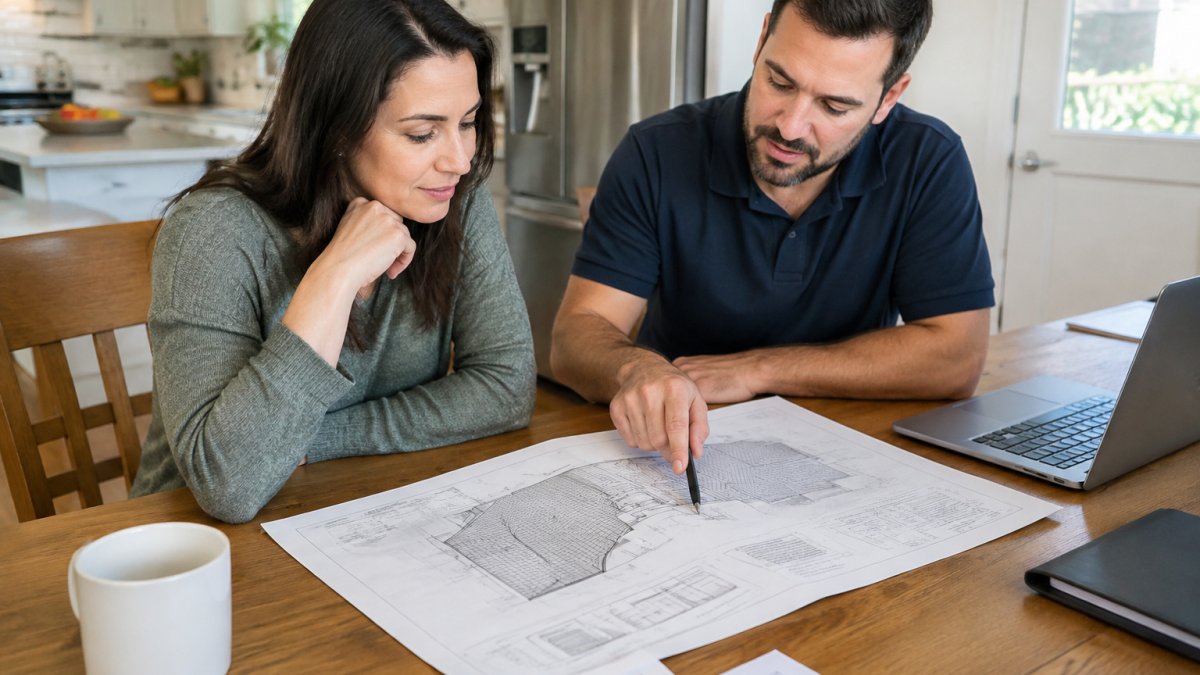
- A site plan showing the roof layout, panel placement, setbacks, and property lines
- Electrical schematics and a single-line diagram covering the inverter, disconnects, and interconnection point
- Equipment spec sheets for the modules, inverter, racking, and battery if one is included
- Structural information, including roof framing details or a roof load analysis where required
- Proof of ownership or the owner's signed authorization
Expect the building department to check each document against local zoning and fire-safety rules. Any mismatch between the site plan and the electrical drawings is a common cause of a correction request, so have your installer cross-check them before submission.
How Long Does Solar Permitting Take in Practice
Review times vary widely by jurisdiction, but the sequence of steps is fairly consistent. Understanding the workflow tells you where the clock actually stops, which matters more than any single benchmark.
The step-by-step permitting workflow
- Pre-application research. Confirm which permits the AHJ requires (building, electrical, or a combined residential PV permit), whether the jurisdiction uses a standard solar permit form, and whether the utility has a separate interconnection application. Many jurisdictions now accept the SolarAPP+ instant permitting platform, which can issue a permit in minutes if the design matches the approved template.
- Plan set preparation. Your installer assembles the site plan, single-line electrical diagram, equipment spec sheets, and structural documentation. A professional plan set typically takes 1 to 2 business days to prepare.
- Submission. This is where digital and paper workflows diverge sharply.
- Plan review. The AHJ checks the file against the adopted building code, the National Electrical Code as locally amended, and local zoning and fire setbacks.
- Correction cycles. Comments are issued, the installer revises, and the file is resubmitted. Each cycle restarts the review clock.
- Permit issuance. Once approved, the permit is issued and posted at the job site.
- Installation and inspection. Work proceeds, then the AHJ inspects.
- Permit closure. The AHJ marks the permit final, which unlocks utility interconnection.
Digital versus paper submission workflows
A growing share of jurisdictions run online portals where you upload the plan set, pay fees by card, and track review status in real time. These portals usually shorten the administrative back-and-forth because comments and resubmissions stay in one thread. Legacy jurisdictions still require in-person filing at a counter, often with multiple paper copies of the plan set, and some require an appointment.
Watch out: in paper jurisdictions, a missing signature or an outdated form version can send you back to the counter and add a week before review even begins.
Realistic timeline benchmarks
The national median AHJ review time for residential PV systems up to 10 kW was 7 business days in 2024, according to Greenlancer analysis of NREL SolarTRACE data, 2024. That figure covers review only, not plan-set preparation or correction cycles. A complete, well-prepared file in a fast jurisdiction can clear in days, while an incomplete file in a busy one can take weeks. Georgia permit processing, for example, typically runs 2 to 4 weeks, while preparing a professional plan set generally takes 1 to 2 business days, according to Solar Permit Solutions Georgia permitting guide, 2026.
Most delay comes from correction cycles, not the first review. Each round of plan-check comments restarts the clock, so a clean first submission is the single biggest time saver. Tracking your application through the building department's portal, if one exists, shows you where the file is sitting and whether it is waiting on the reviewer, the applicant, or a fee payment.
The article breaks the permitting timeline into key stages and benchmarks, summarised below.
| Stage | What happens | Typical time |
|---|---|---|
| Plan set preparation | Installer assembles site plan, diagrams, specs | 1 to 2 business days |
| AHJ plan review | Jurisdiction checks file against codes | 7 business days (national median) |
| Correction cycles | Comments issued, installer revises and resubmits | Restarts the review clock |
| Georgia permit processing | Full permit processing in Georgia | 2 to 4 weeks |
| Permit closure | AHJ marks permit final after inspection | After final inspection passes |
Solar Panel Permit Cost and What Drives the Price
Permit fees are only part of the cost story, and the contractor's licensing status is part of the same picture. An unlicensed installer can void the permit or stall the final inspection, which turns a modest fee into a much larger problem.
Contractor licensing requirements
Installers typically need to hold a valid license before a permit application will be accepted, and requirements vary by jurisdiction. Some AHJs verify the license number against a state database at intake; others check it at inspection. Ask your installer for the license number and confirm it is active before signing a contract.
Watch out: a permit pulled under a license that lapses mid-project can force a re-application and a new fee, so confirm the license will remain active through the final inspection.
What drives permit fees
Fees vary by jurisdiction and are usually set by a published schedule tied to system size, valuation, or a flat residential rate. Colorado's Fair Permit Act, for example, caps residential solar permitting fees at $500, per PermitFlow state fee overview, 2026. Complex permitting and bureaucratic barriers can add an estimated $6,000 to $7,000 to the cost of a typical residential installation, according to Environment America analysis of regulatory barriers, 2026. Industry analysis from the Solar Energy Industries Association also ties non-standardized permitting to an average price increase of $0.18 per watt, per SEIA market analysis, 2026.
Your quote should list permit fees as a separate line, and that line should match the jurisdiction's published schedule. For current pricing, request a quote directly from Go Solar DMV.
Post-installation permit closure
Closing out the permit is a step many homeowners forget. After the final inspection passes, the AHJ must mark the permit final in its system. Until that happens, the permit remains open, and an open permit can surface during a home sale, refinance, or insurance review. Request a copy of the final approval or closure notice and keep it with your other records. If the AHJ does not issue a closure notice automatically, ask your installer to confirm the permit status in writing.
Solar Permit Inspection Checklist for Final Sign-Off
Passing the final inspection closes out the permit and allows the utility to approve the system for interconnection. Inspectors typically check:
- Equipment matches the approved plan set (module count, inverter model, racking)
- Roof attachments and flashings are installed as specified
- Conductors, conduit, and labeling meet code
- Grounding and bonding are complete
- Disconnects and required warning labels are in place and readable
- Rapid shutdown and inverter labeling match the electrical drawings
Have your installer walk the array with this list before the inspector arrives. Corrections found at the final inspection cost a second visit, so catching them early saves time.
HOA Approval, Permit Denials and Closing Out the Permit
Two issues trip up homeowners more than any others: HOA approval and permit denials.
If your community has an HOA or Architectural Review Board, get approval before the building permit is filed in most cases.
A permit denial is not the end of the project. Read the reason stated on the denial, which is usually a specific code section.
Closing out the permit means confirming that the building department has marked the permit final in its system, not just that the inspector left.
Scheduling Your Permit Review With Go Solar DMV
Go Solar DMV's process includes permitting support, though the specific steps are best confirmed during a consultation. If you are ready to move forward, you can start your solar lease-to-own review and confirm whether your home qualifies before the permit file is prepared. For a step-by-step look at the eligibility checks that come first, see how to check solar panel eligibility in Virginia.
Before the permit is filed, we recommend reviewing what a residential solar installation audit covers so you know what the final inspector will check. Permit costs also depend on system size and equipment, so our residential solar panel system cost breakdown shows how permit fees fit into the total price.
Frequently Asked Questions
Do I need a permit to install solar panels on my roof?
Yes. Nearly every residential rooftop solar installation requires a building permit and an electrical permit issued by the local Authority Having Jurisdiction (AHJ), which is usually the county or city building department. The permit confirms that the roof structure can carry the added load and that the electrical design meets the National Electrical Code as adopted locally. Installing without a permit can lead to fines, rejected utility interconnection, and problems when you sell the home, so confirm the requirements with your jurisdiction before work begins.
How long does the solar permitting process take?
Timelines vary by jurisdiction. Review times vary, and many local offices take longer than others, while some understaffed departments can take several weeks. Complete, well-organized plan sets tend to move faster because they avoid correction requests. Budget extra time for plan review, any revisions, and the final inspection before the system can receive permission to operate.
Who is responsible for obtaining solar permits, the homeowner or the installer?
In most cases the licensed installer applies for the permits, prepares the plan set, and schedules inspections, because the work is tied to the contractor's license. The homeowner is usually the property owner of record and may need to sign the application or authorize the contractor to act on their behalf. Ask your installer to confirm in writing who pulls each permit, who attends inspections, and who closes the permit at the end of the project.
What happens during a solar panel inspection?
Inspectors typically check that the mounting hardware is attached correctly to the roof framing, that conductors, disconnects, and labeling match the approved electrical diagram, and that grounding and bonding are installed correctly. Many jurisdictions require a rough inspection before the array is covered and a final inspection after the system is complete. Once the final inspection passes, the AHJ closes the permit, and the utility can proceed with interconnection and permission to operate.
