Does Shaded Roof Work for Solar: A Practical Guide
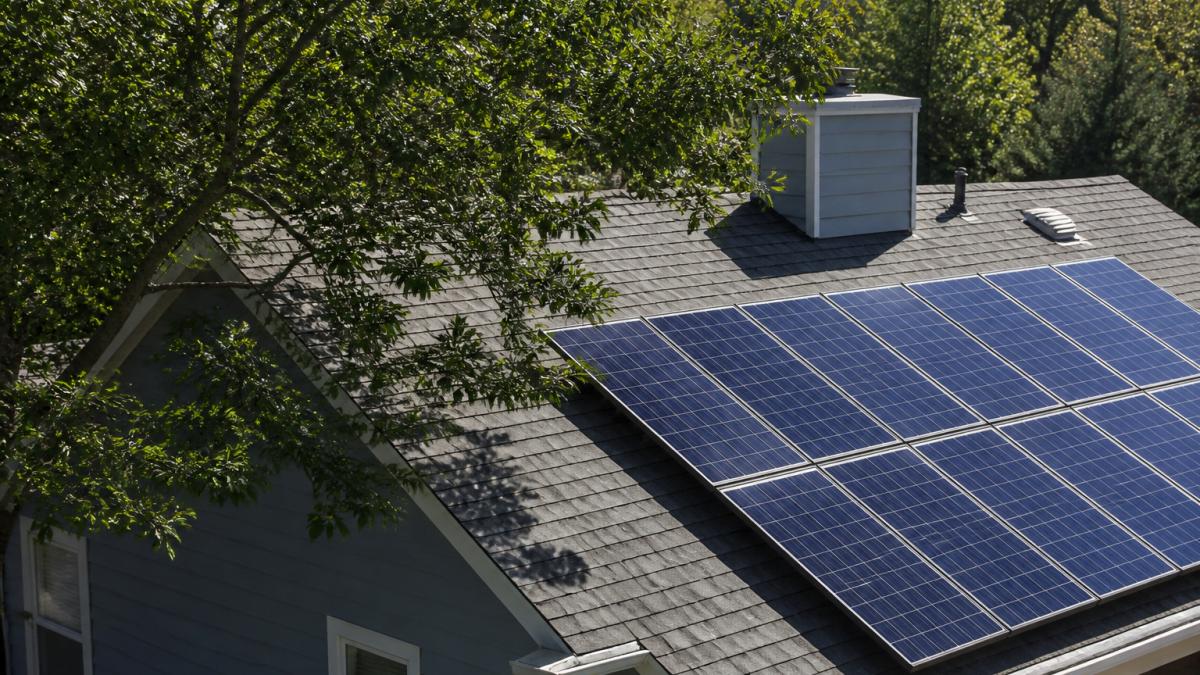
Table of Contents
- How Shade Affects Solar Panel Output
- Assessing Your Roof's Sun Exposure: A Step-by-Step Process
- Solar Panel Shade Analysis: Tools and Methods
- Solar Panels on a Partially Shaded Roof: What to Expect
- Solar Panel Power Optimizers for Shade: How They Work
- Is Solar Worth It on a Shaded Roof: Financial Viability
- Shade Mitigation: Tree Trimming, Removal, and Alternatives
- Frequently Asked Questions
Last Updated: October 14, 2026
How Shade Affects Solar Panel Output
Shade is the single biggest threat to solar panel performance. A shadow covering just 25% of a panel can cut its power production by 50% or more. With traditional string inverters, which tie all panels together, one shaded panel drags down the entire system's output.
Homeowners who succeed with solar on partially shaded roofs plan for reduced production and still find the investment worthwhile.
Assessing Your Roof's Sun Exposure: A Step-by-Step Process
You need to know how much shade hits your roof, when, and how that changes across the year. The process below turns casual observation into a defensible shade profile you can hand to an installer.
Step 1: Map shade by time of day and season
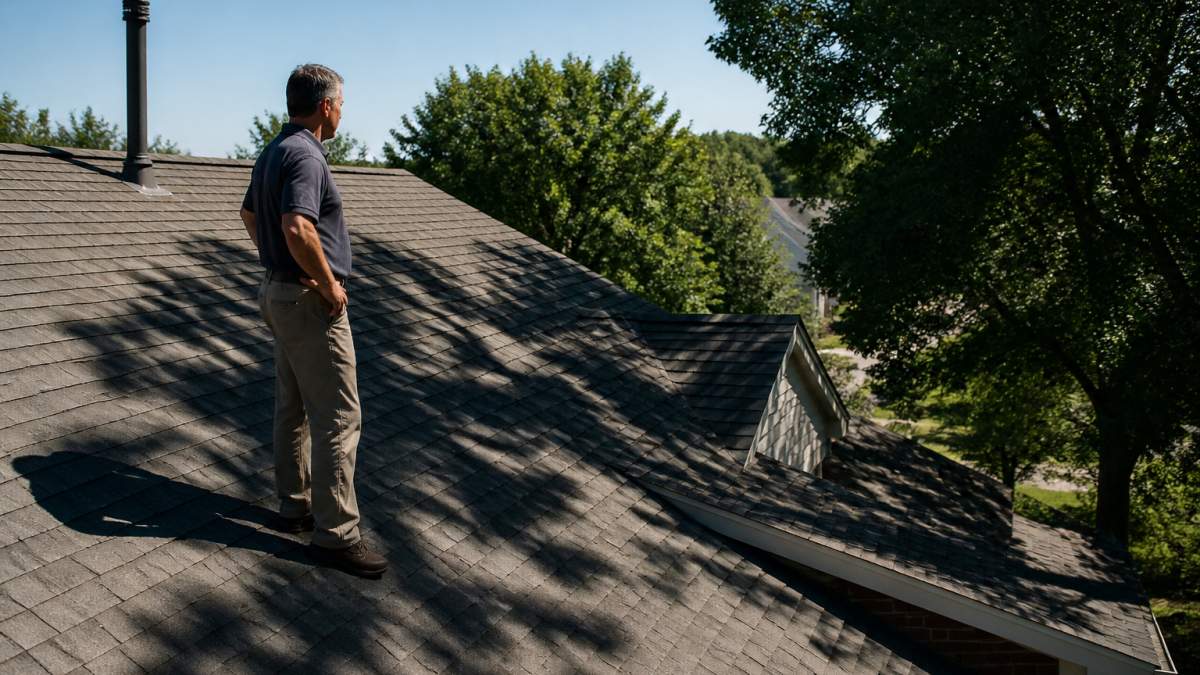
Shade is a moving pattern driven by the sun's altitude and azimuth. Sun altitude peaks near the summer solstice and bottoms out near the winter solstice. Sun azimuth sweeps from northeast at sunrise to northwest at sunset in summer, and from southeast to southwest in winter.
Build a shade log: pick one clear day per season near the solstices and equinoxes, and record conditions at roughly 9 a.m., noon, and 3 p.m. Note which roof planes are shaded and roughly what fraction of each is covered.
Step 2: Identify and rank your shade sources
Rank shade sources by how much productive roof area they block during peak sun hours (roughly 9 a.m. to 3 p.m.).
- Deciduous trees: Bare in winter, dense in summer. They hurt summer production most, when systems generate the most energy and time-of-use rates are often highest.
- Evergreens: Block sun year-round and are usually the worst offenders for annual yield.
- Neighboring buildings: South and west structures cast afternoon shadows; east structures hit mornings. Ask about planned additions.
- Roof features: Chimneys, vent stacks, dormers, and satellite dishes cast small but sharp shadows; on steep roofs the ridge can self-shade the north plane.
- Utility lines and poles: Usually minor, but worth noting if they cross a south-facing plane.
- Future growth: A tree blocking 10% of your roof today can block far more in a decade. Model the canopy at maturity.
Step 3: Convert observations into a shade profile
Summarize your seasonal log in three numbers an installer can use:
- Shaded fraction of the array area during peak hours, per season.
- Timing of the shade, morning, midday, or afternoon.
- Persistence, daily, seasonal, or intermittent (e.g., a neighbor's tree that only matters in winter).
Midday shade is most damaging because irradiance is highest then; morning and late-afternoon shade cost less per shaded hour. A roof 40% shaded at 8 a.m. but clear from 10 a.m. to 4 p.m. is a very different proposition from one 40% shaded at noon.
Step 4: Verify with a tool before you trust a quote
Manual observation gets you 80% of the way. To close the gap, use a free satellite-based estimator such as Google Project Sunroof's solar mapping tool to cross-check your roof's annual solar potential, then ask your installer to run a professional shade analysis (fisheye photography or a solar pathfinder) and share the hourly production model, not just a single annual number.
If a proposal's estimate is materially higher than your seasonal log suggests, ask why, the answer reveals whether the installer modeled your shade or assumed a clear roof.
Solar Panel Shade Analysis: Tools and Methods
Professional shade analysis uses specialized tools.
Google Project Sunroof maps your roof using satellite imagery and 3D terrain data.
Fisheye photography captures a 180-degree view of the sky above your roof, letting installers identify obstacles and calculate sun exposure hours.
Solar pathfinder tools plot the sun's path at your latitude, showing exactly when shade hits your roof and from which direction.
Our AI Solar Advisor analyzes your roof geometry, shade patterns, and local climate to predict annual production with high accuracy.
Solar Panels on a Partially Shaded Roof: What to Expect
A partially shaded roof can work for solar. You won't match an unshaded roof, but you can still generate meaningful electricity and cut utility bills. Output loss depends on how much of your roof is shaded, when, and which technology handles it.
Shade covering 25-50% of your roof typically reduces annual output by 15-35%, manageable for many homeowners. Shade covering 50-75% reduces output by 35-60%, harder to justify unless rates are very high or you have incentives like tax credits. Shade covering 75%+ usually makes solar not worth the investment.
Solar Panel Power Optimizers for Shade: How They Work
Power optimizers are the most effective technology for partially shaded roofs, solving the main problem: one shaded panel no longer drags down the whole system. With traditional string inverters, if one panel is shaded and producing 30% power, the entire string operates at 30% power.
Power optimizers sit on each panel and convert its DC power independently before sending it to the main inverter. If one panel is shaded, only that panel loses output; the rest run at full capacity. The result: a system with optimizers loses 10-20% output from shade instead of 50%+.
Microinverters versus string inverters with optimizers
Microinverters are small inverters attached to each panel that convert DC to AC right at the panel, isolating each panel's performance like optimizers.
For partially shaded roofs, both work well; the choice comes down to cost, maintenance, and system design.
String inverters with optimizers cost less and are simpler to monitor. Most installers prefer them for residential systems.
For a shaded roof, either beats a basic string inverter. Ask your installer which suits your shade pattern.
Is Solar Worth It on a Shaded Roof: Financial Viability
The real question is whether reduced output still pays for itself over the system's life, a modeling question built from your roof's actual shade profile, not a generic calculator.
Step 1: Start with your electricity rate and usage
Pull a recent utility bill and find your average rate per kilowatt-hour and annual usage in kilowatt-hours. Use your own bill, not a national average. On a time-of-use plan, note the peak-window rate, that's when shaded production losses hurt most.
Step 2: Estimate annual production with and without shade
A production estimate has three inputs: system size (kW), your location's solar resource (production per kW per year), and a shade derate factor.
- Unshaded baseline: A well-sited mid-Atlantic system typically produces 1,200-1,400 kWh per kW per year, so a 7 kW system lands in the 8,400-9,800 kWh range before shade.
- Shade derate: Light, morning-only shade might lose 5-15%; significant afternoon shade 20-40% or more; heavy midday shade past 50%.
Multiply the unshaded estimate by (1 − shade derate) to get expected annual production.
Step 3: Turn production into bill savings
Annual savings ≈ annual production × your effective rate. A shaded system producing 6,000 kWh at 14 cents per kWh saves about $840 per year. If net metering credits exports at a lower rate, apply that rate to exported kWh.
Step 4: Account for incentives and net metering
- Federal residential clean energy credit: The Investment Tax Credit (ITC) is a percentage of your installed cost. Confirm the current percentage and carryforward rules with a tax professional.
- State and utility incentives: These vary and change frequently. Check your state energy office and utility solar program page for rebates, SREC markets, and interconnection rules.
- Net metering: Exported power may be credited at the full retail rate or a lower avoided-cost rate. This single policy can swing payback by years.
Step 5: Calculate payback and lifetime value
Payback period = net system cost after incentives ÷ annual savings.
Example:
- System cost before incentives: $21,000 (7 kW at roughly $3 per watt installed)
- Federal credit at 30%: −$6,300
- Net cost: $14,700
- Annual production after shade: 6,000 kWh
- Effective rate: 14 cents/kWh
- Annual savings: $840
- Simple payback: about 17.5 years
That's marginal. At 20 cents/kWh, savings rise to $1,200 and payback drops to about 12 years, much stronger. If shade cuts production to 4,000 kWh, payback stretches past 25 years and likely doesn't pencil out.
Step 6: Consider sizing down instead of derating up
On a shaded roof, install fewer panels on the least-shaded plane rather than filling every plane and accepting heavy losses. A smaller, well-placed array can produce nearly as much as a larger, heavily shaded one at lower cost, improving payback.
Shade Mitigation: Tree Trimming, Removal, and Alternatives
Removing the shade source is the simplest solution, but it's not always possible or practical.
Tree trimming reduces shade without removing the tree. An arborist can identify which branches block the most sun.
Tree removal eliminates shade permanently but is expensive and costs you summer shade, privacy, and property value.
Roof repositioning is rarely an option, your roof faces the direction it faces.
Does shaded roof work for solar? Yes, if you approach it strategically.
Go Solar DMV helps homeowners in Virginia, Maryland, and Washington D.C. answer this with precision.
Frequently Asked Questions
How well do solar panels work in shade?
Solar panels produce significantly less electricity in shade. Even partial shade reduces output, sometimes by 50% or more, depending on how much of the panel is blocked. Full shade eliminates production almost entirely. Intermittent shading (shadow moving across panels throughout the day) is less damaging than constant shade. Modern power optimizers and microinverters can recover some lost production by isolating shaded panels, but they cannot eliminate the fundamental loss. A shaded roof may still work financially if enough unshaded area exists or if your electricity rates are high.
Can solar panels work on a partially shaded roof?
Yes, but with reduced output. A partially shaded roof can still deliver meaningful energy production and savings if the unshaded portion is large enough and receives consistent sun exposure. The key is assessing which areas get shade and for how long. South-facing sections that receive morning or afternoon sun often work well. Using module-level electronics (power optimizers or microinverters) helps partially shaded systems perform better by preventing one shaded panel from dragging down the entire string. Your payback period will be longer than a fully unshaded system, but solar may still be worth it financially.
What technologies help solar panels perform better in shade?
Power optimizers and microinverters are the main solutions. Power optimizers sit on each panel and allow shaded panels to operate independently, preventing them from reducing the output of unshaded panels. Microinverters convert DC to AC at each panel, offering similar isolation benefits. String inverters (the traditional setup) do not handle shade well because all panels in a string are limited by the weakest link. Bypass diodes inside panels also help, but they are a basic feature in all modern panels. The choice between optimizers and microinverters depends on system design, roof layout, and budget.
Is solar worth the investment if my roof is mostly shaded?
A mostly shaded roof is usually not a good financial investment for solar. If more than 50% of your roof receives regular shade, annual energy production drops sharply, extending payback periods beyond 10-12 years and reducing your return on investment. However, if you have high electricity bills, live in an area with strong net metering rules, or can trim trees to improve sun exposure, solar may still make sense. The best approach is to get a professional shade analysis using tools like Google Project Sunroof or a site survey to quantify your roof's actual solar potential before deciding.